Equine Gastric Ulcers (EGUS)
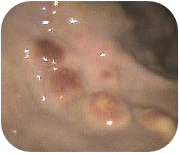
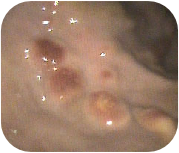
Endoscope picture of typical upper-wall ulcers – courtesy Dr Tim Brazil
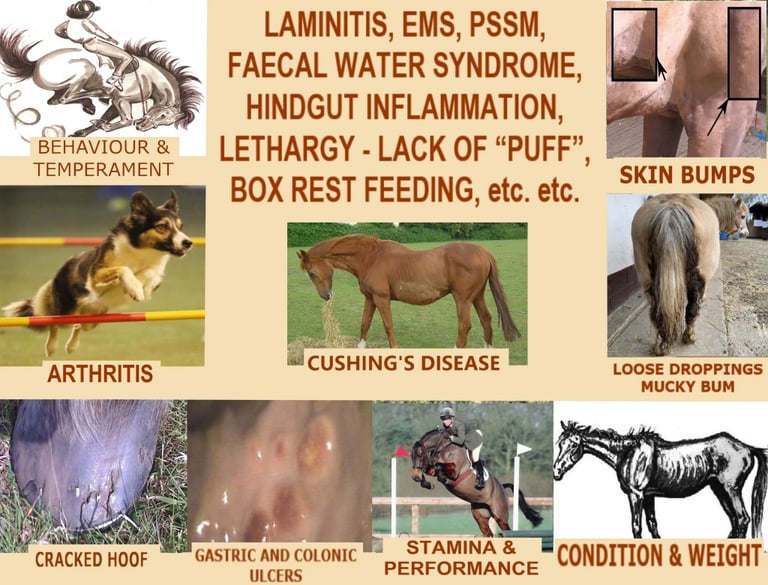
It has become apparent in recent years that a significant number of horses are suffering from gut disorders such as gastric and colonic ulcers. There are 2 types of gastric ulcer: Equine Squamous Gastric Disease (ESGD), which occur in the upper wall of the stomach, and are caused when acid. splashes onto it when empty or during exercise. See the illustration below.
The other type, Equine Glandular Gastric Disease (EGGD) occurs in the lower part, where the mucus lining is damaged, often by stress or drugs such as 'bute.
Symptoms of Gastro-Intestinal Ulcers include:
- poor condition.
- general lack of appetite.
- windsucking & crib-biting, grinding teeth and excessive salivation.
- weaving and box-walking.
- lethargy, dull coat.
- acute or repetitive mild colic.
- loose droppings and fluid; scouring.
- Fractious behaviour, including bucking when ridden, objecting to girth tightening.
- Sensitive flanks, especially the right.
- Difficulty or resistance to bending and collection.
Causes of gastric ulcers
- Frequent or excessive use of NSAID type drugs e.g. 'Bute; these damage the lower gut wall, in the acidic region.
- Can occur when feed is bolted - there is a lack of saliva to buffer stomach acid.
- A horse is allowed to go hungry - no fibre in the stomach to protect against damage by stomach acid -for example in the early hours before morning stables.
- Intensive exercise - can cause the stomach acid to splash onto the upper, unprotected stomach wall. The lower part has a lining of mucus to protect it.
- Stress - causes contraction of abdominal muscles, in turn compressing the stomach and forcing acid up onto the unprotected upper wall.
- Feeding poor quality acidic haylage (mainly affects hind gut).
Horseheath Nutrition can provide advice on management & diets for horses experiencing the problems outlined above. Please complete the NUTRITION ENQUIRY form & submit
Diagnosis:
The only sure diagnosis for gastric ulcers is by gastroscopy which can only be performed by a vet.
Management
All horses should have a supply of forage 24/7. They are trickle feeders & need a continuous supply of fibre to maintain gut health. Strong hydrochloric acid is continuously produced in the stomach; chewing forage generates saliva which buffers the acid.
Long fibre produces a mat, or crust, on top of the stomach contents, which will reduce or prevent splashing onto the unprotected upper stomach wall which causes ulcers. It should always be included with hard feed
Restricted hay feeders, or nets either with a small mesh, or doubled should be used in stables to make overnight hay last well into the early hours, so that stomachs are never empty.
A slice of 2 of straw can also be provided to maintain forage supply.
Chopped alfalfa is particularly suitable because of its high calcium content.
Grazing is beneficial.
Treatment: there is a wide range of supplements available, from the simple acid - suppressors such as aluminium & magnesium hydroxides & calcium carbonate to various herbal supplements with anti-inflammatory herbs such as slippery elm bark, chamomile etc & nutrients such as brewers & live yeast, arginine & glutamine. The efficacy of these is very variable. The author had some spectacular successes & abysmal failures with a product he formulated some years ago.
For gastric ulcers vets will prescribe omeprazole for 28 days to suppress the acid & allow natural healing. Sucralfate will be added to treat glandular ulcers. This is the most effective & also expensive treatment but must be followed by changes to diet & management to prevent recurrence.
Some owners have been buying Abler omeprazole from North America; this is much cheaper but illegal without a vet's prescription. Substantial amounts were seized by the Border Force & Veterinary Medicines Directorate late in 2024
Hindgut Ulcers can occur in the large colon. The symptoms are similar to those for gastric ulcers. Precise diagnosis is not possible, as cameras cannot reach far enough in to the hindgut. The only definitive method of diagnosing hindgut ulcers is Transabdominal ultrasound, performed by a vet. Faecal blood tests are less reliable.
Causes The most common is the use of drugs such 'Bute for more than 7 - 10 days. Others include excess starch reaching the hind-gut, stress, microbial infection & parasites such as worms.
Treatment requires modifying the diet to ensure it has minimal starch, contains anti-inflammatory herbs, nutrients such as arginine & glutamine, & pre & probiotics which promote a healthy gut flora, in particular the microbes that synthesise butyric acid. If there is chronic diarrhœa, this can be treated with supplements such as bentonite & activated charcoal, & codeine phosphate (prescription only - veterinary advice should be sought). These suppress the symptoms; your horse's diet will need to be checked to prevent recurrence.
©Horseheath Nutrition
To Contact:
Call/text +44 (0) 7721 384508
whatsapp +44 (0) 7807 479495
Use the General Enquiry Form for e-mail