Gut Problems:
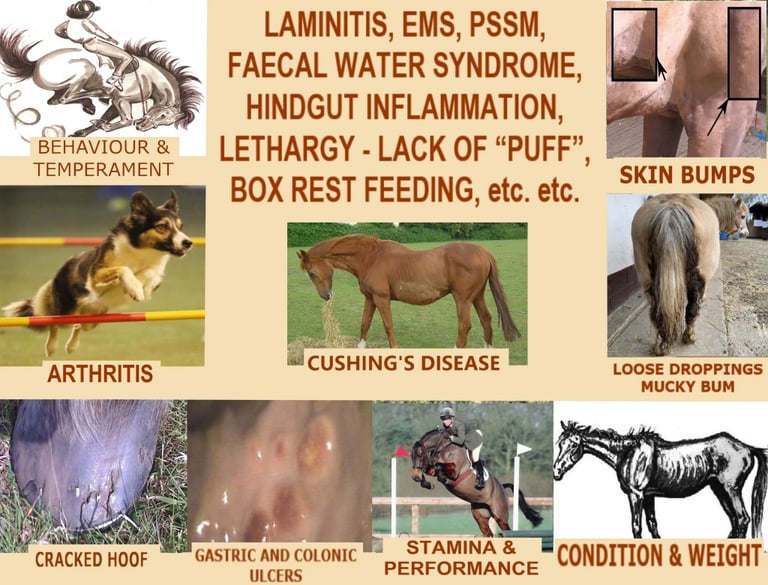
Colic, Loose droppings, diarrhœa, fæcal water, ulcers, enteroliths & sand colic, constipation,
Colic is commonly used to describe abdominal pain in the horse. It occurs quite frequently, is usually only moderate and may pass without being noticed. Mild cases can rapidly become severe so should always be monitored carefully. If in the slightest doubt CALL THE VET! All horse owners will be only too aware of the symptoms of severe colic and its consequences.
There are several types with numerous causes:
Gut overload – if excess starchy feed or spring grass or grass cuttings are eaten, high volumes of gas may be produced in the hind-gut by fermentation. This gas can become trapped in the intestines and cause blockage.
Poor quality (mouldy) feed.
Irregular feeding pattern, preventing regular supply of fibre.
Dehydration is a major cause of colic etc, especially in the winter. Horses like drinking freezing water as much as we do! Reduce the risk by keeping water at home, at room temp. in 20 or 25lt cans & take to the stables as required. Flavouring agents can be added to water to encourage drinking, & salt to feed.
Lack of exercise (essential for releasing the gas produced normally by the digestive processes). Flexing of the muscles when moving helps massage the gut wall & encourages expulsion of the gas.
Worm damage to the gut wall and its blood supply.
Stress - can be caused by travelling or bullying.
Working immediately after feeding.
Impaction Colic - eating very fibrous material e.g. wheat straw, poor hay, woodchips etc., leading to blockage. This can caused by poor teeth resulting in inadequate chewing of food. Seek treatment from an equine dental technician or vet.
Intestinal strangulation - "twisted gut" - can sometimes be corrected by putting the afflicted horse in a lorry or trailer & driving at speed along a rough, bumpy road. Veterinary assistance, possibly involving expensive surgery, is otherwise required.
Constipation - occurs when droppings become hard & dry & can be painful. Horses suffering may paw or roll. Major causes are dehydration, lack of exercise, poor quality forage & enteroliths. Treat with laxatives such as very liquid bran mash, psyllium husk or epsom salts; veterinary assistance will be required if not rapidly resolved.
Enteroliths - accumulation of sand and other detritus in the gut. Particles can become coated with mineral deposits which can be as large as gold balls & in extremis block the intestine. Horses on short pasture &/or sandy soil should be regularly fed psyllium husk to clear debris. Severe cases may require surgery.
Tumours and other abnormal growths.
Gastric and colonic ulcers.
Most of the causes outlined above can be avoided by good management. Correct feeding is also vital. The horse has a complex digestive system, which has evolved to handle high volumes of leafy vegetable matter. the fibrous part of which is broken down by cellulose-digesting microbes. A dynamic microbial population is maintained in the hind-gut; sudden dietary changes can have deleterious consequences, as outlined above.
Nutritional Factors
A forage-only diet is inadequate for many horses & needs supplementing.
Nutrient – dense products such as cereal grains, vegetable oils, oilseeds & proteins, and mineral/vitamin supplements are used. Whilst the horse is well able to digest such materials, they are not a natural part of its diet so need to be fed with care.
By combining such feeds with long fibre, for example, chopped straw or dried grass or hay or alfalfa, it is possible to slow the rate of passage of feed through the small intestine and so ensure maximum digestion of the soluble nutrients such as starch and protein. Replacing starchy ingredients with high quality vegetable oils and proteins, and good quality digestible fibre greatly reduces the likelihood of excess starch and sugar reaching the hind-gut, where fermentation can cause excess gas production. Pre- & probiotic supplements such as brewers'(dead) yeast & live yeast (saccharomyces. cerevisciæ) will boost the beneficial bacteria in the hind-gut, suppress the harmful ones & help keep it healthy.
For expert advice on feeding & management to avoid or rectify the problems outlined above complete & submit the
Equine Nutrition Enquiry form
©Horseheath Nutrition
To Contact:
Call/text +44 (0) 7721 384508
whatsapp +44 (0) 7807 479495
Use the General Enquiry Form for e-mail