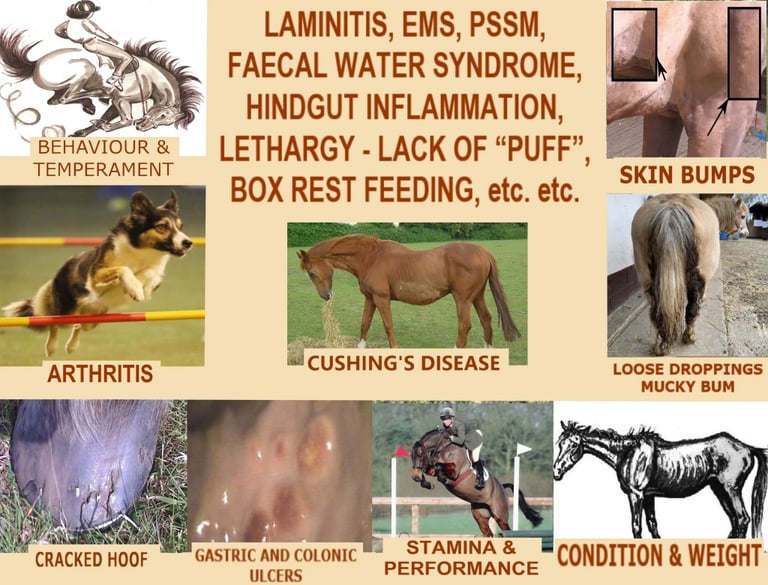
Laminitis
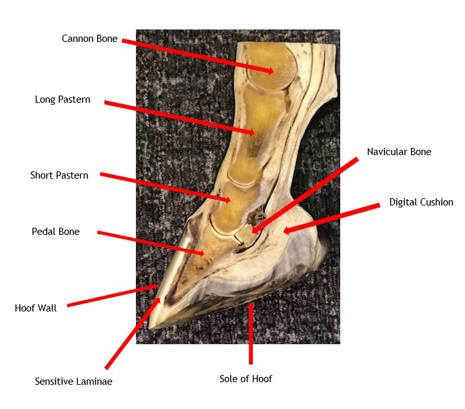
This is a painful condition causing lameness & in extremis death. It occurs when the membranes holding the pedal bone become detached & allow it to rotate downwards, in extremis penetrating the sole of the hoof, which then often requires euthanasia.
Click HERE FOR SYMPTOMS
Principal Causes
Excessive starch & sugar intake leading to Insulin Resistance (IR)
During food digestion starch is broken down to sugar, as glucose which, together with that in feed & forage passes into the bloodstream. This triggers an increase in the level of insulin which reverts to normal when the body has processed the glucose. High, prolonged intake of sugar & starch results in persistent excessive levels of insulin which can attack the membranes which hold the pedal (coffin) bone in place.
Laminitis caused by IR is particularly prevalent in the spring, as grass etc grows rapidly, producing lots of sugar on warm bright sunny days. Frosts can have the same effect, as can an excessive intake of starch & sugars in feed & forage.
There is considerable expert advice online - click Google
EMS – Equine Metabolic Syndrome due to obesity, especially in ponies, causes imbalances in blood sugar/fat/insulin ratios, which results in insulin resistance.
Cushing’s Disease - Pituitary Pars Intermedia Dysfunction– is a malfunction of the pituitary gland, leading to excess production of several hormones, leading to IR. This is a typical problem of the older horse or pony.
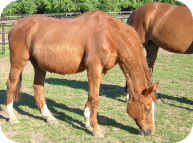
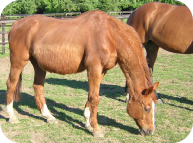
This horse was suffering Cushings disease. This picture was taken in early June. Note the winter coat still on the belly, neck, and legs. Ten days later, more of the winter coat had been shed but a weight loss problem had become apparent. The ECIR Group Website provides a comprehensive account of the causes & symptoms of PPID
For guidance on feeding please complete the Nutrition Enquiry form so that John Chapman can provide you with suitable advice
Other Causes
-Undigested sugars and starches passing into the hind-gut of the horse are broken down to products such as lactic acid. The increased acidity allows harmful microbes to proliferate, creating toxins which can attack the membranes in the hooves.
-Percussion – the effect of riding/jumping on hard ground.
-Use of steroids – thought to make the gut wall more permeable to the toxins which trigger laminitis.
-Infection – e.g. post-parturition.
-Antibiotics can upset the balance of the hind-gut microflora.
-Stress.
-Sensitivity or allergic reaction; the author knows of a horse, and an owner, who are both sensitive to rapeseed oil. The horse developed severe laminitis. The person developed blotchy skin, which eventually returned to normal after stopping taking a supplement containing the oil. This particular problem is fortunately rare. Some other feed ingredients can also cause similar problems, in particular, skin irritation.
Control & Prevention
This requires management of diet & lifestyle to minimise the intake of starch & sugars to prevent occurrence in the first place, & to aid recovery when it does happen. Assistance from your vet &/or farrier will almost certainly be required; definitely in severe cases . If you submit a Nutrition Enquiry Form John Chapman will look to see if he can advise you to as to the best feeds & management techniques
Winter Laminitis
This can occur in very cold weather when blood flow to the hooves is restricted. Horses with the problems outlined above are more susceptible.
Insulating the lower limbs & hooves with suitable wrappings or leg protectors to maintain blood circulation can help plus the usual dietary considerations – feeding meadow rather than ryegrass haylage or hay, & soaking it. Choosing feeds with the lowest possible starch & sugar content is essential for example unmolassed plain oat chaff + mineral/vitamin supplement or balancer (be careful – the latter may contain some starch & sugar).
©Horseheath Nutrition
To Contact:
Call/text +44 (0) 7721 384508
whatsapp +44 (0) 7807 479495
Use the General Enquiry Form for e-mail